Sustainably in - 14 July 2026
Where has the night gone?
There are places where darkness is protected by law.
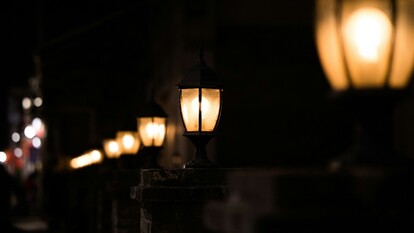
This is the case in the Canary Islands, where for more than thirty years the Ley del Cielo has restricted artificial lighting, regulated certain radio emissions and introduced measures to reduce the impact of human activities on the quality of the night sky. Its original purpose was to safeguard one of the clearest skies on the planet, an essential condition for the work carried out by the astronomical observatories of Tenerife and La Palma.
At first glance, it may seem like legislation designed exclusively for astronomers. In reality, it reflects a much broader issue.
We are accustomed to thinking of laws as instruments designed to protect what we can see and touch: a forest, an animal species, a historic building. It is more difficult to imagine that darkness, too, can be a resource worth preserving.
And yet, this is precisely the principle behind the Ley del Cielo.
Protecting the night means recognising the value of a natural condition that has accompanied life on Earth for centuries and that is now at risk of disappearing from the most heavily urbanised areas. A condition that concerns the sky above us, but also the ecosystems that depend on darkness and the biological rhythms of our own bodies.
An invisible resource
Darkness supports the functioning of ecosystems just as much as light does. For millions of years, plants, animals and human beings have developed their rhythms in response to the natural alternation between day and night.
Artificial light, which has become widespread on a large scale only relatively recently, has altered this balance at a pace matched by few other environmental changes. The effects are particularly evident in species that live or navigate at night.
Many insects are attracted to artificial light sources to the point of exhaustion, reducing the time available for feeding and reproduction. Some nocturnal pollinators visit fewer flowers, with consequences that may also affect a range of agricultural crops. Many migratory birds navigate using the stars and the moon, but artificial lighting can disrupt their routes and increase the risk of collisions with buildings and infrastructure.
Newly hatched sea turtles also rely on the light reflected by the sea to reach the ocean. Along heavily urbanised coastlines, this natural reference point becomes more difficult to distinguish. Lights from hotels, homes and roads can disorient them, drawing them inland and drastically reducing their chances of survival.
When the sun sets, a complex ecosystem comes to life, shaped by relationships, behaviours and biological processes on which thousands of species depend. Protecting the night ultimately means protecting these invisible balances as well.
Blue night
Our own bodies also follow the natural rhythm of light and darkness.
Each evening, the reduction in light is interpreted as a biological signal: melatonin production increases, body temperature drops slightly and the brain begins to prepare for sleep.
When this mechanism is disrupted by continuous exposure to artificial light, particularly light rich in blue wavelengths emitted by screens and certain types of LED lighting, the circadian rhythm may also be affected.
In recent years, numerous studies have associated light pollution with greater difficulty falling asleep, poorer sleep quality and possible indirect effects on metabolism, psychological well-being and cardiovascular health. The scientific evidence presents a complex picture, but converges on one point: darkness contributes to the proper functioning of the human body just as much as light does.
Sleeping well certainly depends on the number of hours spent resting, but also on allowing the night to fulfil its natural role.
A resource to be designed
Today, the debate is not so much about how much light we use, but rather about how we use it.
Urban planners and lighting designers increasingly refer to intelligent lighting solutions: systems that reduce light intensity during periods of lower use, shielded fixtures that limit upward light dispersion, and warmer-coloured light sources with a lower impact on ecosystems.
Sustainable lighting design seeks the right balance: providing light where it is needed, when it is needed and at the necessary intensity. In this way, safety, quality of life, biodiversity protection and reduced energy consumption can be addressed together.
For decades, we have regarded darkness as something to be eliminated. Scientific evidence now invites us to look at it differently and to recognise its role in the balance of natural systems and human health.
We continue to extend our days, accelerate our pace and make every space available at every hour, as though every limit were an obstacle to overcome. Yet many of the systems that sustain life function precisely because of alternation, periods of rest and moments when something slows down to make room for something else.
The night reminds us of a simple truth: no ecosystem (and perhaps neither can we) remain switched on forever.
Sostenibilmente in…: beyond the article, a technical lens and practical tools
If what you’ve just read has sparked a thought, you’ll find much more in the Sostenibilmente in… newsletter: a concise yet content-rich format designed for those who want to stay up to date on sustainability. Each month you’ll receive the full edition, with materials that broaden your perspective and practical tools you can bring into your day-to-day work.
The newsletter is curated by our sustainability team.
Alongside the main feature, you’ll find additional “plus” content with a technical focus: implications, contextual interpretations, and useful connections to help you make sense of what is happening, not just read about it.
If you’d like to receive the next issues with all sections and extra content, SUBSCRIBE TO THE SOSTENIBILMENTE IN… NEWSLETTER.
The “plus” sections you’ll find in Sostenibilmente in…
- Resonances: a visual prompt that adds perspective and depth, making the issue’s theme immediately tangible for the reader.
- To Listen: a space for a reflective pause, a curated musical reference that, in tone and meaning, echoes the key questions raised in the article and invites you to engage with the topic not only technically, but also through its emotional and cultural dimensions.
- The Noticeboard: an infographic tool that neatly curates useful resources related to the theme of the month, ideas to explore further, tools, initiatives, and selected content to consult, download, and share at work, at home, or at school.