Activity - 23 December 2025
Sustainability Team Gesteco Supports VeGAL with an Educational Methodology for the Circular Economy
RESET is launched: an Interreg AWASTER project initiative dedicated to circular economy education in secondary schools
In November 2025, Beeability, Gesteco’s sustainability team, launched the RESET initiative in support of VeGAL – the Eastern Veneto Development Agency, as part of the Interreg AWASTER project (Adopting WASTE as a Resource).
This is a programme that introduces an educational methodology focused on the circular economy into upper secondary schools. The aim is to test a replicable model for education on the management of post-consumer plastic.
RESET was developed within AWASTER, a project of the Interreg Italy–Croatia Cooperation Programme 2021–2027, which aims to promote the transition towards a circular economic model by reducing waste generation through education and the exchange of experiences among the coastal regions of Italy and Croatia. The initiative places particular emphasis on engaging younger generations and economic sectors to improve waste management and recycling.
Within this framework, VeGAL, as the Development Agency for Eastern Veneto and lead partner of the Venetian FLAG, participates in all AWASTER work packages and manages relations with schools and project partners, including IRENA, Associazione Sunce, SINLOC S.p.A., the Municipality of Casarano, and GAL-LAG 5.
Among the activities envisaged by the project is the development of EcoLabs -educational laboratories created through the RESET pathway- with the aim of establishing replicable teaching models based on participatory methodologies, capable of fostering awareness, creativity, and environmental skills within schools.
In this context, Beeability supports VeGAL as a technical partner throughout the RESET pathway, from the design of the educational concept to the definition of experiential activities (such as RESET Live and RESET Laboratory), the development of a teaching format grounded in creativity, play, and active learning, and the design of monitoring and evaluation tools.
How the RESET project works and the methodology it proposes
RESET responds to a clear and concrete need expressed by schools: to address complex topics such as resource use, waste management, and the circular economy through a structured and measurable educational pathway. The model proposes an educational methodology based on active learning, designed to support teachers and to engage students in a conscious, participatory, and informed manner.
The project is structured into two complementary phases, conceived as a progressive learning journey.
RESET LIVE - Experiential school event
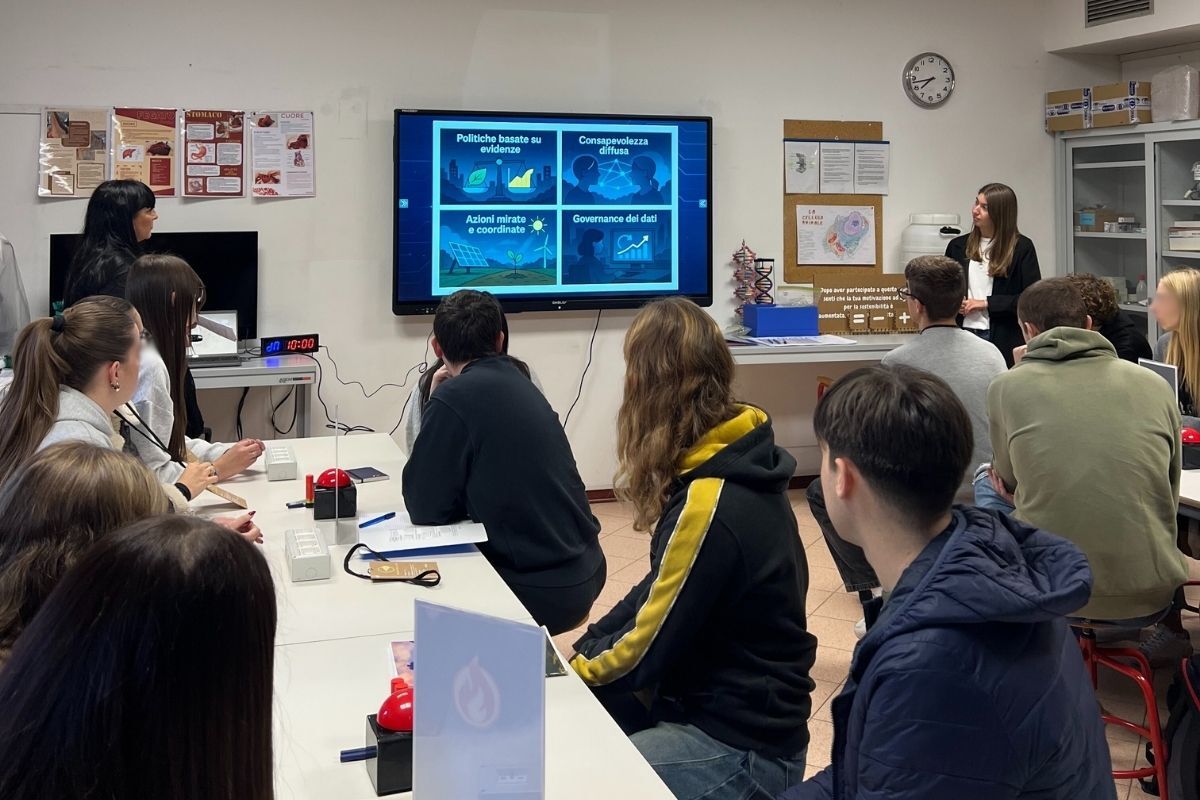
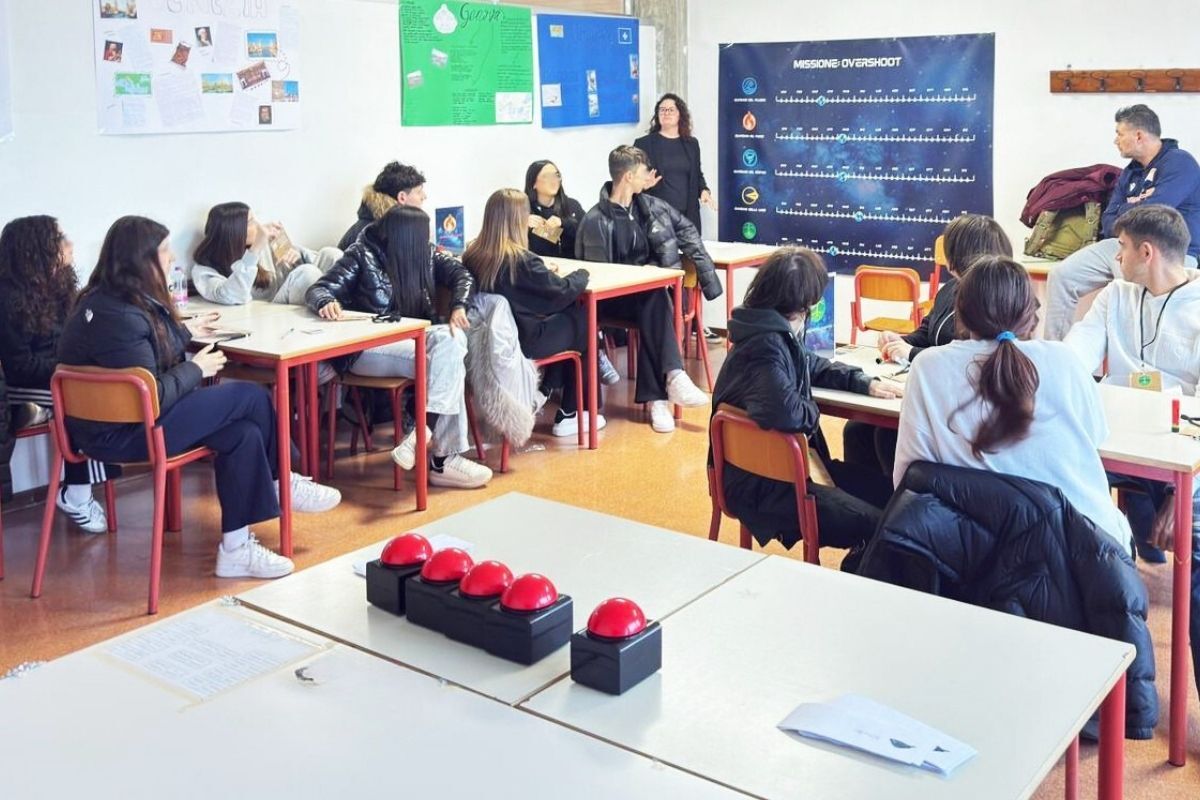
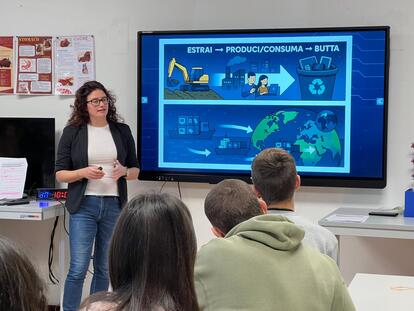
To date, the first phase of the project, RESET LIVE, has been implemented. This phase consists of an experiential and interactive event that engages students in a guided introduction to the topics of planetary boundaries, Overshoot Day, and the value of resources. Through storytelling supported by data and educational content, students are guided towards an understanding of the global context.
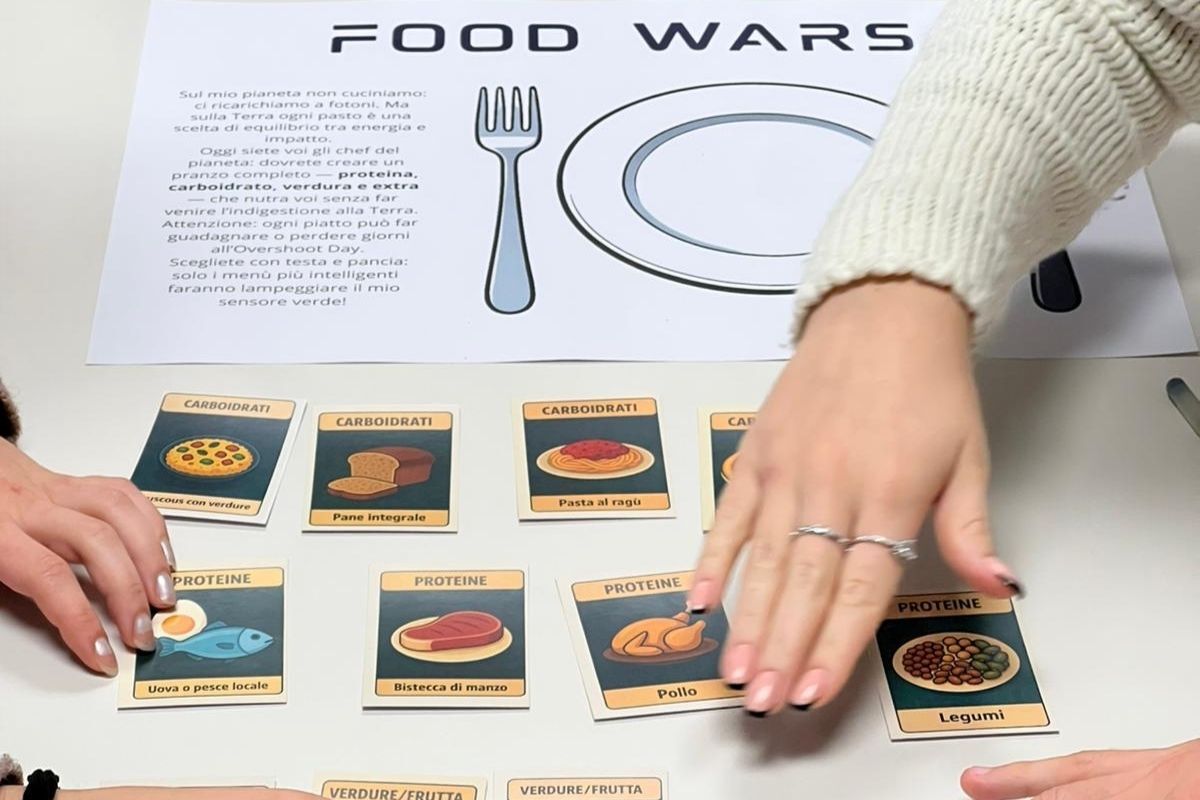
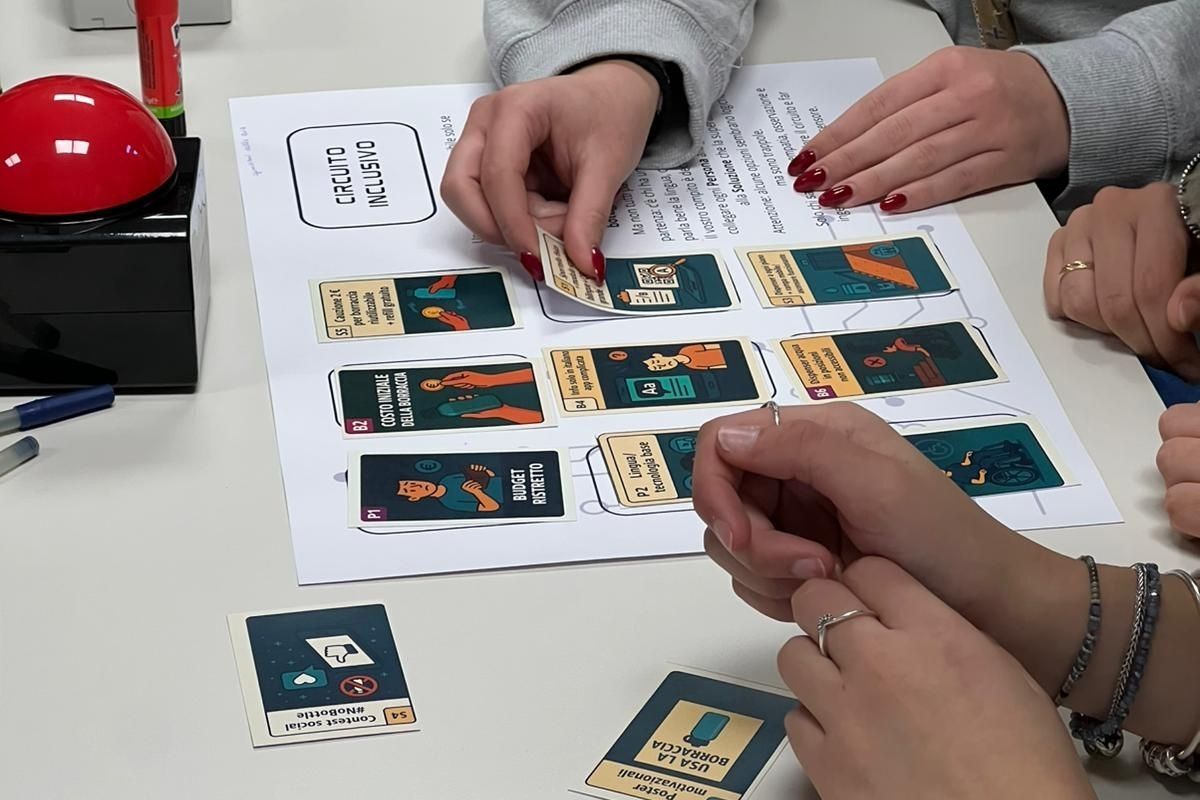
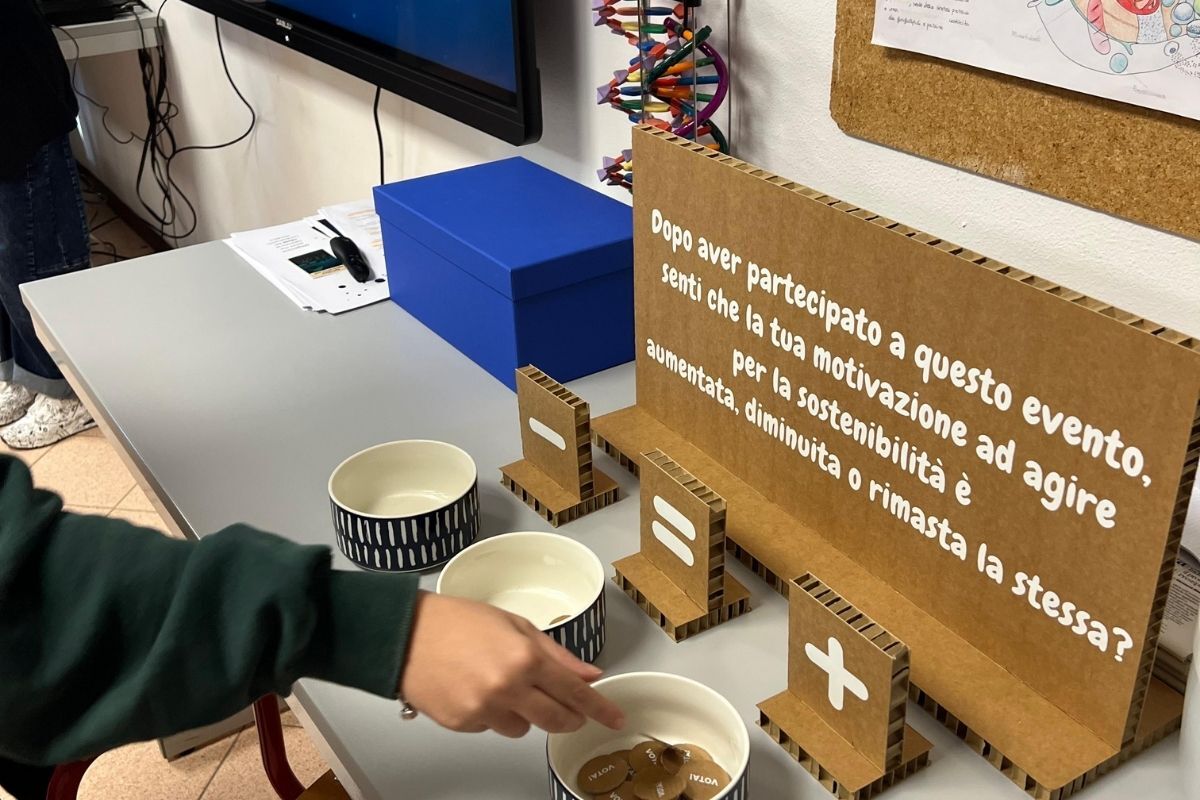
The activity then continues with a series of team-based games and challenges that place groups in direct competition across different areas of sustainability: climate, inclusion, food, water, fashion, waste, plastics, energy, and sustainable communication. The challenges alternate moments of reasoning, collaboration, strategic choice, and peer-to-peer discussion, fostering skills such as analysis, critical thinking, teamwork, communication, and decision-making. Team performance determines access to the next phase of the programme.
Within organizations, a purpose defined with rigor and coherence becomes a strategic lever. It is not an identity manifesto, but a true governance mechanism that makes it possible to integrate sustainability in a credible and continuous way.
Il Sole 24 Ore has highlighted that many Italian companies are beginning to consider it a factor of competitiveness: an orientation that supports innovation, resilience, and reputation. Not because it adds complexity, but because it reduces ambiguity.
By contrast, a study conducted by Polimi Graduate School of Management and BCG BrightHouse highlights three key elements:
- purpose is perceived as increasingly central to strategic decision-making;
- in companies where it is integrated, it improves internal alignment and the ability to anticipate change;
- when it remains generic or poorly communicated, it loses strength and does not lead to transformation.
The data speak clearly: where purpose is applied methodically, the ability to achieve objectives increases, people’s satisfaction improves, and external credibility grows. Purpose and sustainability move forward together because they reinforce each other.
RESET LABORATORY - the transformation lab
The second phase, RESET LABORATORY, is scheduled for spring 2026 and will involve only the groups that won the LIVE phase. In this stage, students will be immersed in a hands-on laboratory focused on the transformation of post-consumer plastic, previously collected and sorted. Guided by an expert trainer, they will safely experience the main stages of mechanical recycling—shredding, melting, and molding—using dedicated machinery and modular molds. The laboratory will make the material’s journey visible and encourage concrete reflection on collection quality, product durability, reuse, and individual and collective responsibility.
Overall, RESET provides teachers and students with an integrated educational methodology: the LIVE phase focuses on developing a systemic understanding of sustainability issues, strengthening transversal skills, and fostering critical awareness; the LABORATORY phase, instead, delves into the material flows associated with post-consumer plastic and enables students to experiment, on a small scale, with circular economy processes. The overall emphasis is on reinforcing skills such as analysis, critical reading, teamwork, design, and communication, promoting meaningful and long-lasting learning.
The first RESET pilot activities in local schools
RESET activities were launched in the Portogruaro area through two pilot implementations of the RESET LIVE phase, involving a total of approximately 125 upper secondary school students.
The first pilot was carried out at Liceo XXV Aprile in Portogruaro, where the activities took place over two mornings and involved fourth- and fifth-year students, for a total of around 50 participants. The sessions recorded high levels of participation and very positive feedback, with students demonstrating active engagement throughout all stages of the team-based challenges.
In December 2025, the project continued at ISIS Luzzatto in Portogruaro, involving three third-year classes from three different study tracks, for a total of approximately 75 students. In this case as well, participation was high and cross-disciplinary, with strong interest shown by students in engaging with the proposed topics through the game- and challenge-based format.
In both schools, access to the second phase of the project was determined by the outcomes of the team challenges carried out during the RESET LIVE phase. Based on the results achieved, approximately 10 students from Liceo XXV Aprile and 15 students from ISIS Luzzatto will take part in the RESET LABORATORY phase, scheduled for Spring 2026.
Technical contribution to the RESET project
Within the AWASTER project, Beeability contributes to the development of the RESET educational model by providing technical and methodological support. This contribution covers both the definition of the topics addressed and the overall structuring of the pathway, with the aim of ensuring coherence between educational objectives, proposed activities, and the skills developed by students.
Beeability works alongside VeGAL in building the RESET model, contributing to the design of the two phases of the programme -the experiential event and the laboratory - and to the integration of content related to the circular economy, resource use, post-consumer plastics, and, more broadly, the relationships between behaviours, production systems, and environmental impacts. The support also includes a strong focus on the educational and communication dimension, ensuring that complex topics are translated into clear, engaging experiences suitable for the school context.
The contribution further extends to operational support for schools and project partners, particularly with regard to the organisation of the laboratory activities planned for the second phase of the project, with specific attention to logistical aspects, safety requirements, and the proper management of materials.
Future perspectives and replicability of the RESET methodology
RESET was designed as a structured and replicable methodology, built on a clear articulation of its phases, standardised educational materials, and a core set of indicators for monitoring activities.
In the coming months, VeGAL and the project partners will analyse the results of the initial RESET LIVE pilot activities to assess the effectiveness of the model and the conditions for its extension to other school contexts across the territory. The objective is to consolidate RESET as a transferable educational model, supported by guidelines and operational tools, and suitable for use by schools, educators, and local stakeholders as a resource for sustainability and circular economy education pathways.