Sustainably in - 5 December 2025
The why that holds us together
The purpose that connects us, the future we build

It’s December. And with December comes Christmas, that moment of the year when, almost without realising it, we manage to pause and, with fewer distractions, reconnect with our families, whatever form they may take.
Because each of us has our own way of living “family”: the one we grew up in, the one we chose, the one we hold close even just through a message, or a paw waiting for us behind the door.
And during the Christmas season, when everything slows down a little, these different ways of being together become closer, more present, almost more real. It’s the time when small everyday gestures become concrete ways of saying to one another: we’re here.
Perhaps this is what Christmas reminds us of better than any other occasion: that we are made of relationships. And, deep down, isn’t sustainability also this? Taking care of the bonds: with people, with places, with the future.
And it is precisely when we recognise the value of these relationships that something also shifts inside us: we realise that what guides us is not the urgency of our days, but the reason that keeps us in balance.
From here, a simple question arises, one that matters both in life and at work: what is your why?
Not the formal one, but the one that guides your actions when no one is watching, the one that holds your choices together, the one that gives direction.
In Japan this idea is close to ikigai: the intersection between what we love, what we know how to do and what we can contribute to. A simple, yet powerful knot.
And it is precisely from here - from relationships to our why, from ikigai to the direction we choose - that the door opens on to a concept that matters more and more at work: purpose.
Purpose: the “why” that guides us
Simon Sinek - Trained as an ethnographer, Simon is fascinated by people and organisations that manage to generate deep, lasting impact. Over time he has identified remarkable patterns in the way they think, act and communicate, as well as in the environments that enable people to express their full potential.
Purpose is not a sentence to hang on the wall nor a stylistic exercise. It is the point where what we know how to do meets what we believe is right to do. It aligns skills, values and intentions. It doesn’t just define goals: it gives meaning to choices.
That is why, when a purpose is clear, whether individual or collective, it changes the quality of our work and our decisions. It allows us to listen better, choose better, act better. And inevitably, it also changes the way we approach sustainability: not as a chapter to be added, but as a daily criterion that guides behaviours and priorities.
Purpose and business: when it becomes a flywheel for sustainability
In organizations, a rigorously defined and consistently applied purpose becomes a strategic lever. It’s not a brand manifesto, but a true governance mechanism that enables credible, ongoing integration of sustainability.
Il Sole 24 Ore has highlighted how many Italian companies are beginning to see purpose as a source of competitiveness, an orientation that supports innovation, resilience, and reputation. Not because it adds complexity, but because it reduces ambiguity.
A study by POLIMI Graduate School of Management and BCG BrightHouse points to three key findings:
- Purpose is increasingly viewed as central to strategic decision-making;
- Where it is embedded, it improves internal alignment and the ability to anticipate change;
- When it remains generic or poorly communicated, it loses force and fails to drive transformation.
The data are clear: when purpose is applied methodically, organizations are more likely to meet their goals, employee satisfaction improves, and external credibility grows. Purpose and sustainability advance together, each reinforcing the other.
Purpose as a managerial lever
A well-structured purpose:
- guides strategic choices;
- helps define what to do and what not to do;
- improves alignment between leadership and teams;
- accelerates the adoption of sustainable practices;
- makes ESG risks and opportunities easier to read.
Its strength lies in clarity: it doesn’t add activities; it selects directions. It doesn’t multiply initiatives; it sets priorities. It doesn’t stay in words; it enters processes.
Examples that speak for themselves
Some companies have built their identity around a strong, operational purpose.

Ben & Jerry’s - “To make, distribute & sell the finest quality all natural ice cream…”: producing, distributing, and selling the best possible ice cream with natural ingredients and transparent supply chains. This purpose is not only about product quality; it orients the company toward social justice, civic engagement, activism, and transparency, shaping every decision from ingredient sourcing to public campaigns.
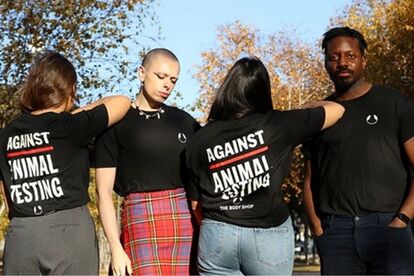
“We want to ban forever the cruel practice of animal testing in cosmetics.” - The Body Shop
The Body Shop - “To dedicate our business to the pursuit of social and environmental change.” This is not an aspirational statement: it has guided pioneering choices against animal testing, in favor of fair trade, and for human-rights activism, creating a credible business model recognized worldwide.
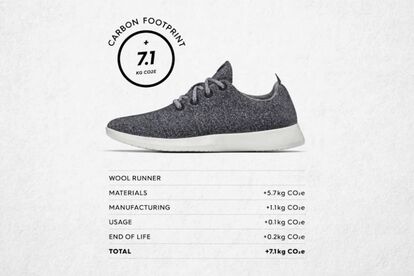
“While aiming for long-term climate goals, we are also working to support nature-based carbon removal projects more closely connected to our value chain.” - Allbirds
- Allbirds - “To make the most comfortable shoes on the planet, using sustainable materials.”
This means creating the most comfortable shoes in the world while using sustainable materials. That purpose has led to the development of proprietary biomaterials, the mandatory publication of each product’s CO₂ footprint, and radically transparent industrial models.

Dove is committed to making beauty a source of happiness for all women, today and for future generations, not a source of anxiety. Every woman should be able to define beauty on her own terms, turning it into a source of joy and self-expression.
Dove - “For Real Beauty”, a clear stance to promote an idea of real, inclusive beauty, free from stereotypes. This purpose has reshaped the entire beauty-communications industry, influencing representations, global campaigns, and educational programs that build self-esteem in younger generations.
What truly unites these examples? The ability to use purpose as a decision criterion, even when it’s uncomfortable, and turn it into choices that leave a concrete mark.
A practical, applicable view
Three points are decisive for using purpose as a real accelerator of sustainability:
- Purpose is a choice, not a slogan. It must be concise, non-negotiable, and understandable to everyone.
- Purpose sets boundaries. It is credible only if it clearly states what the company will not do—even when it would be convenient.
- Purpose must enter processes. If it doesn’t guide metrics, governance, evaluation systems, and people development, it remains theory.
When purpose becomes the lens for reading impacts, priorities, and responsibilities, it tangibly supports the ESG journey and helps companies move more clearly through environmental, social, and technological transitions.
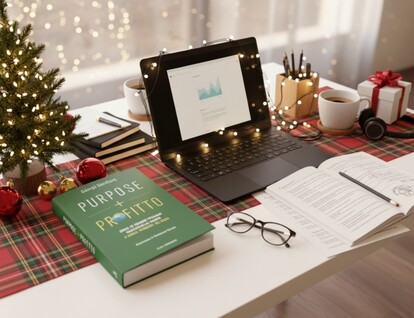
Purpose and Profit: How Business Can Lift Up the World, a book by George Serafeim, Professor of Business Administration at Harvard Business School
E noi, come persone?
And what about us, as people? Perhaps personal and corporate purpose have more in common than they seem: both begin with a question that can’t be delegated.
“Why do you do what you do?”
Not “for whom,” not “to achieve what,” but precisely why.
When we understand that, even partially, it changes how we inhabit our work, our homes, our world.
When it’s authentic, purpose isn’t about us; it’s about what we choose to care for: climate, people, communities, places. That’s where it meets sustainability, not as decoration, but as concrete responsibility.
To care for what does not fully belong to us: this is, at heart, its simplest and most demanding lesson.
And so, now that the holidays are upon us…
…let’s remember that purpose, too, lives in everyday choices. It’s in the priorities we set, the way we collaborate, and the energy we put into things.
Christmas offers a concrete metaphor: choosing gifts that make sense, that meet a real need, that don’t weigh people down but help. It applies to relationships; it applies to businesses.
A purpose works the same way: it doesn’t add noise, it clarifies; it doesn’t complicate, it brings order.
That’s why my wish for this season is simple, but sincere:
may you find a moment, however brief, however imperfect, when something inside you becomes clear. A moment when your “why” makes itself heard again, quietly, without needing to prove anything. A moment that, on its own, is enough to bring your priorities back into focus.
And to accompany this in-between time with a bit of warmth, a song that always seems to bring you home even when you’re not really far away: “L’essenziale” - Marco Mengoni.
I’ll close with a big thank-you!
Thank you for choosing to spend a bit of your time reading, and perhaps pausing to reflect with me on our whys, on the meaning of our being here on this planet.
Perhaps this is our fine line of connection: the willingness to be sustainable not only in our actions, but in our outlook, our intentions, and the choices we make every day.
Merry Christmas,
Chiara Pontoni
Sustainability Manager